|
| 







Countdown
The concept of “better-for-you” bread continues to evolve as consumer expectations around nutrition and sustainability grow. Today’s consumers are looking beyond traditional whole-grain formulations and paying closer attention to protein content, lipid quality, antioxidant benefits, and the environmental impact of ingredients.
Among the emerging ingredients attracting attention in the baking sector, microalgae have become a promising option for enhancing both the nutritional and functional value of bread. As discussions around innovative ingredients continue to expand at global industry platforms such as the Baking ingredientexhibition, microalgae are increasingly recognized as a potential solution for developing next-generation functional bakery products.
Scientific research has shown that species such as Chlorella vulgaris and Arthrospira platensis, commonly known as spirulina, can significantly improve the nutritional profile of bread when incorporated at appropriate levels. These microalgae contain high levels of protein, beneficial fatty acids, antioxidants, and minerals, making them suitable for use in functional food formulations.
Research on multigrain breads enriched with Chlorella vulgaris demonstrated that incorporating microalgae at approximately 1.9% of flour weight can significantly increase protein content compared with standard wheat bread. Protein levels increased by approximately 82% to 91%, allowing the final product to meet regulatory standards for “high-protein” food claims in certain markets.
At the same time, although the inclusion of ingredients such as lupin and microalgae slightly increased the total lipid content of the bread, the level of saturated fat remained relatively low. This balance between higher protein levels and controlled saturated fat illustrates the formulation potential of microalgae in the development of functional bakery products.
Beyond protein enrichment, microalgae also offer advantages in terms of lipid composition. Bread enriched with microalgae has been shown to contain higher levels of monounsaturated and polyunsaturated fatty acids compared with conventional wheat bread. This shift in fatty acid composition reflects the natural characteristics of microalgal biomass and creates new possibilities for positioning bread as a plant-based source of beneficial lipids.
In a market that increasingly values plant-based nutrition and sustainable sources of omega-3 and other functional fats, this nutritional improvement represents a meaningful differentiation opportunity for bakery products.
The functional benefits of microalgae extend even further. Studies evaluating bread fortified with mixtures of spirulina and Chlorella have reported higher total polyphenol levels and enhanced antioxidant capacity when microalgae are incorporated into bread formulations. Antioxidant activity increases proportionally as the level of microalgae rises within the formulation.
These findings suggest that microalgae enrichment may support both nutritional claims and potential improvements in oxidative stability within bakery products. As consumers continue to seek foods that combine taste with functional benefits, ingredients that deliver multiple nutritional advantages are becoming increasingly valuable.
However, formulation balance remains important. When the proportion of microalgae in bread formulations becomes too high, sensory challenges may appear. Research indicates that substitution levels around 5% can lead to changes in product characteristics, including stickier dough textures, reduced loaf volume, and the development of slightly sour or marine-like flavor notes.
For this reason, ingredient levels must be carefully optimized to maintain both nutritional performance and consumer acceptance.
Hydration management is another key technical consideration when working with microalgae in bread formulations. Studies on multigrain breads enriched with microalgae highlight that water content plays a major role in determining final texture and sensory quality. Proper hydration can help mitigate firmness or bitterness that may arise from ingredients such as lupin and microalgae, resulting in a more balanced product.
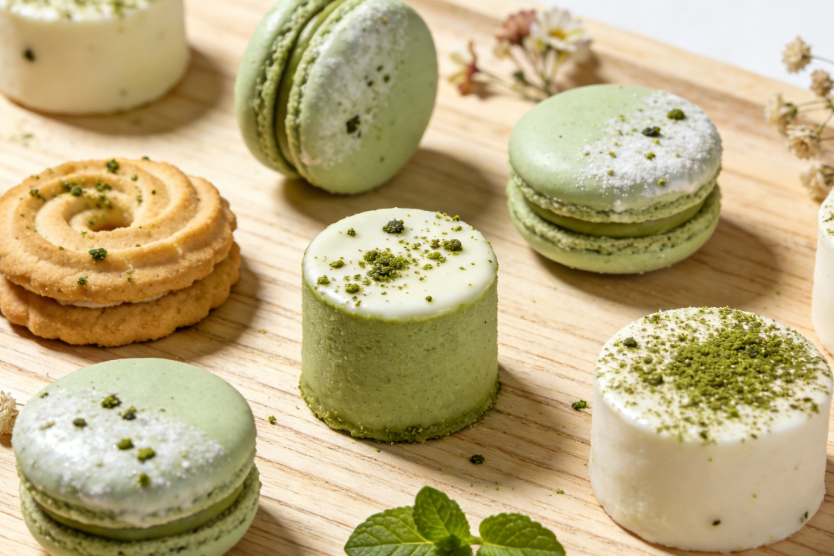
Color development is also an important factor. At inclusion levels between approximately 1% and 3%, the crumb of the bread may develop a light green hue due to the natural chlorophyll pigments present in microalgae. When higher levels are used, color changes may become more pronounced as pigments transform during the baking process.
Depending on product positioning, this visual characteristic can either represent a challenge or an opportunity. In health-oriented or plant-based product lines, the natural green color may reinforce the functional narrative and highlight the presence of innovative ingredients.
Overall, the research demonstrates that microalgae are more than simple nutrient fortifiers. They can simultaneously enhance protein density, improve fatty acid composition, increase antioxidant capacity, and contribute to mineral enrichment. Few ingredients provide such a wide range of functional benefits within a single formulation strategy.
For bakers considering this ingredient, current research suggests that inclusion levels between approximately 1% and 3% of flour weight provide an effective balance between nutritional enhancement and sensory quality. Within this range, protein enrichment, improved lipid composition, and antioxidant benefits can be achieved without significantly compromising texture or flavor.
As consumer interest in plant-forward nutrition and sustainable food systems continues to grow, microalgae are gradually transitioning from experimental ingredients to practical components within modern bakery formulations. Their ability to combine nutritional value with functional performance positions them as a promising ingredient for the next generation of bread innovation.
Source: Baking Business

© 2015-2022 Bakery China Exhibitions Co., Ltd. 京ICP备14040776号-1 
All the third-party information is all advertisement.