|
| 







Countdown
In the world of commercial baking, freshness is paramount, and the battle against staling begins the moment a product leaves the oven. While the natural process of starch retrogradation—the recrystallization of amylose and amylopectin molecules—cannot be entirely prevented, its onset can be significantly delayed. This scientific challenge has given rise to a sophisticated toolbox of clean label solutions, many of which are set to be showcased at the upcomingBaking ingredient exhibition.
Starch retrogradation is an unavoidable post-baking phenomenon that alters crumb structure, leading to a drier, more rigid texture. As one industry innovation manager explained, this process is essentially gelatinized starch attempting to return to its original crystalline state. To counter this, enzyme-based anti-staling ingredients have become a baker’s little secret. These proteins function with remarkable specificity, cleaving the branched chains of amylopectin into smaller saccharides. According to an expert from a food ingredient company, these less organized molecular chains reorganize much more slowly, effectively prolonging the time it takes for bread to become stale.
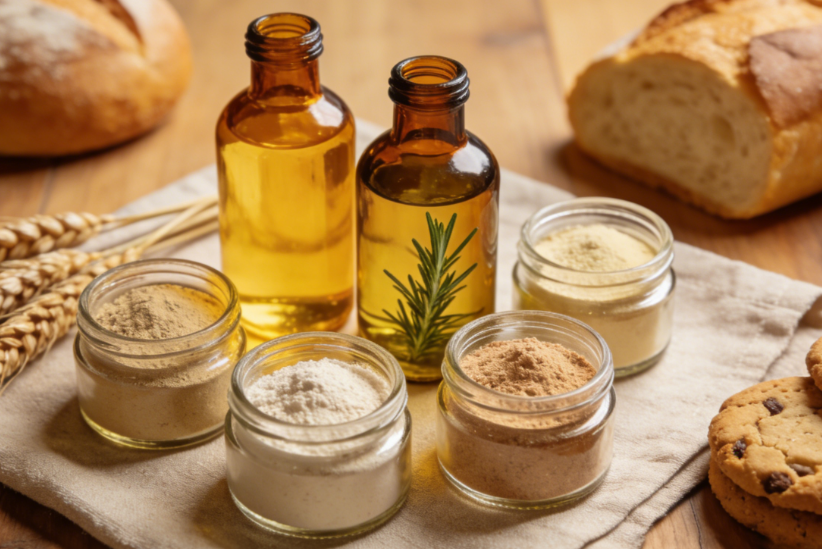
Enzymes are particularly valued as clean label alternatives to synthetic additives. Used at minute levels, they act as processing aids rather than functional ingredients. Once an enzyme completes its intended reaction—modifying a specific compound on a substrate—it typically becomes inactive, often deactivated by heat, pH adjustment, or pressure. This allows it to work without leaving any direct impact on the product’s sensory attributes or appearing on the ingredient statement. Specific enzymes, such as maltogenic amylase, target starch molecules in breads and pastries, breaking them down into maltose. This not only inhibits retrogradation but also contributes subtle sweetness and flavor enhancement.
A key consideration for bakers is that enzyme performance is highly dosage-sensitive. Using more does not necessarily yield better results. Short-term amylases may improve softness for up to seven days, while specialized variants can extend softness to 28 days. Doubling the dosage of a short-term enzyme will not double its effect; in fact, overdosing can negatively impact the final product. Selecting the right enzyme requires a thorough understanding of the application, the production process, and the intended distribution environment. Often, the most effective approach involves a combination of enzymes tailored to specific attributes such as softness or resilience. As a baking solutions specialist noted, whether working with lean doughs or formulations high in sugar and fat, the ideal solution depends on the desired shelf life and product characteristics.
Replacing conventional ingredients with enzyme systems requires rigorous testing. Shelf-life evaluations can be time-consuming but are essential to ensure that a new ingredient performs as expected. In some cases, replacing a single synthetic additive—such as sodium stearyl lactylate, which serves multiple functions including anti-staling, dough strengthening, and emulsification—may require a combination of enzyme technology, natural dough strengtheners, and emulsifiers like lecithin.
Beyond staling, lipid oxidation is another major factor limiting shelf life. Fats and oils, whether added directly or present in whole grains, nuts, or seeds, are prone to oxidation, which leads to rancidity and off-flavors. While oxidation cannot be reversed, it can be slowed through the use of antioxidants. Traditional synthetic options are effective and economical but are increasingly being replaced by clean label alternatives. These include tocopherols (vitamin E) and high-phenolic plant extracts derived from rosemary, green tea, and acerola. These natural antioxidants help preserve freshness without introducing chemically derived names to the ingredient label.
Ultimately, extending the shelf life of baked goods is a multifaceted endeavor. The most effective systems often integrate enzymes, natural ferments, and antioxidants, carefully selected to match the specific application and target shelf life. By harnessing these advanced yet label-friendly solutions, bakers can deliver products that maintain their quality, texture, and flavor from production to consumption.
Source: Baking & Snack

© 2015-2022 Bakery China Exhibitions Co., Ltd. 京ICP备14040776号-1 
All the third-party information is all advertisement.