|
| 







Countdown
As the bakery industry continues to evolve, reformulation has become an essential part of product development, especially when adapting recipes to meet new dietary preferences and ingredient trends. Bakers are increasingly relying on scientific tools and systematic approaches to ensure that product quality remains consistent even when key ingredients are adjusted. Within this context, innovations presented at the International BakeryExhibition highlight how advanced formulation strategies and ingredient technologies are reshaping modern baking practices.
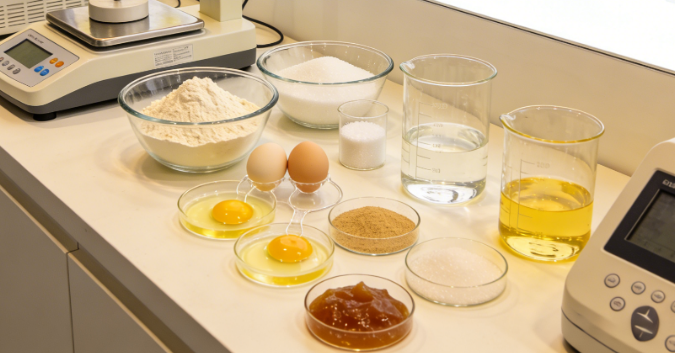
A critical aspect of successful reformulation lies in understanding the functional role of each ingredient. Eggs, for instance, contribute multiple properties to baked goods, including structure, moisture, emulsification, and aeration. When replacing them, it is necessary to evaluate these contributions in detail and replicate them through a combination of alternative ingredients. Industry professionals often rely on formulation calculators and technical specifications to determine how fat, protein, and water content should be balanced, ensuring that the final product maintains similar performance during mixing, baking, and cooling. This precise approach reflects the growing integration of food science into bakery innovation.
In addition to formulation design, analytical and testing tools play a vital role throughout the development process. Parameters such as pH value, moisture content, water activity, and texture are closely monitored to assess how ingredient changes affect both dough behavior and final product quality. These measurements provide valuable insights into rheological and structural transformations, allowing bakers to refine recipes with greater accuracy. Sensory evaluation is equally important, as consumer perception of color, flavor, and texture ultimately determines market acceptance.
Despite technological advances, the complexity of egg functionality means that some products remain more challenging to reformulate than others. Items that rely heavily on eggs for structure and aeration—such as foam-based baked goods—require particularly sophisticated solutions. Egg proteins naturally form stable networks that trap air and create volume, making them difficult to replicate with a single substitute. As a result, modern egg replacement systems often combine multiple ingredients, each targeting a specific function within the formulation.
Cakes are among the most technically demanding applications due to their dependence on eggs at multiple stages of production. During mixing, eggs contribute to foaming and emulsification, helping to incorporate and stabilize air bubbles. As baking progresses, proteins coagulate and interact with starch to form a stable internal structure. Without this process, products may lose volume or develop less refined textures. In contrast, certain categories such as yeast-raised baked goods are more adaptable, as eggs primarily enhance flavor and softness rather than structural integrity.
Other product types, including cookies and chemically leavened goods, also offer greater flexibility for ingredient substitution. In these applications, texture and structure are influenced more by sugar, fat, and leavening agents, allowing alternative ingredients to perform effectively with fewer adjustments. Nevertheless, achieving optimal results still requires careful testing and iteration, as no single solution can fully replicate the multifunctional nature of eggs.
Overall, successful reformulation depends on a comprehensive understanding of ingredient functionality, supported by analytical tools and iterative testing. By combining scientific precision with creative problem-solving, bakers can develop products that meet evolving market demands while maintaining high standards of quality. As ingredient innovation continues to advance, the ability to tailor formulations for specific applications will remain a key driver of progress in the bakery and snack industry.
Source: Bakery & Snack

© 2015-2022 Bakery China Exhibitions Co., Ltd. 京ICP备14040776号-1 
All the third-party information is all advertisement.